My mother directly asked me to keep my thoughts about her private (even though there are many positive thoughts to be had!), so this short entry will only say that, a few days ago, my mother, Joanne Hulsey, née Tomaso, died surrounded by those who loved her. She will be missed.
19 April, 2026


18 November, 2024
Fire
6:16 a.m.
"Eric? The lights are flashing."
Audible pops and crackles accompanied each surge and dim, between 1–3 hertz. Something was definitely wrong.
I jumped up, listened more closely, and rushed outside. The transformer box next to our house, only five feet from the edge of our home, called out angrily, sputtering obscenities with each gushing of flame. Each bout of fire was only a foot in height, but it was especially strange seeing the fire emit from what I'd previously thought of as only asphalt. Smoke billowed from the transformer's core, telling me that fire may well also be in the box itself. The plumes were punctuated with each scream of the transformer; it reminded me of smoke signals. I immediately ran inside.
I called out to Katherine as I rushed upstairs: "You need to call out from work. I have to turn the breakers off."
The noise ceased as the circuit breakers were all turned off. I grabbed my phone and rushed downstairs, telling Katherine I would be calling 911 as I went outside.
The visible fire had stopped and the noises were gone. But the transformer itself continued to emit huge quantities of smoke. I called emergency services while I watched from a distance.
I can't recall his opening line; maybe he identified himself as a 911 operator first. But within two seconds of the phone call being answered, I was already prompted to give my address. I was then asked to repeat the address for the recording, asked for my name, and only then prompted to share what the emergency was. I get why they asked for the address twice before anything else, but why ask for my name? I suppose it may help to calm some people down, or perhaps help to identify people after the fact, but these seem insufficient reasons to ask for a name before asking about the emergency.
Two minutes later, I was off the phone and came inside to help Katherine and inform her of what was going on. She was in an inner room, using a lantern to see; together, we moved to the room closest to the front door, then I went outside to wait for the fire department. It did not take long for them to arrive.
I'm happy to report that all is well now. The fire department ensured nothing would get worse while the power company was called in to fix the issue. Once the smoke had stopped, the firemen left and the professionals began working on the issue. A pre-teen sized hole was dug; huge equipment was brought in on the street beside our home; and half a dozen workers did all that they could to resolve the issue. I was told I could turn my breakers back on, and, ten hours later, the electricity was back on in our home.
During those ten hours, a shipment of groceries arrived, Katherine played on her Switch, and I read voraciously. Overall, it went well. I am grateful to live in a place where people will come to help if we're ever in an emergency. In retrospect, the worst part of the day was surprisingly not that when I witnessed the small flames, nor hearing the loud pops, nor watching the continuous plumes of smoke while I talked to 911. No, the worst part was my reaction when the power came back on. I don't know how I ever got so spoiled, but I caught myself muttering a rather ungrateful "finally" as the power resumed and I was once again able to put my feet up in a power chair. I'm so embarrassed by my immediate reaction, and after only a moment's thought afterward, I chastised myself for being so jaded. Now, with the proper distance of it being 9 p.m. and the whole ordeal being over, I am properly thoughtful. I'm grateful to all those who helped us; I'm grateful to Katherine for noticing the problem so quickly and prompting me to act; and I'm especially grateful that the fire stayed away from our home proper.
29 September, 2024
Review: Time to Orbit: Unknown
 The Javelin Program by Derin Edala
My rating: 5 of 5 stars
I've always been fascinated by sociology in science fiction. Whether they're Belters from Corey's The Expanse, or various individuals in Banks' The Culture, seeing the sociological ramifications of various sci-fi premises is always something that scratches my rationalist itch.
I also love a good mystery in science fiction; these are somewhat more rare, usually showing up with unfair deus ex machina, but occasionally something like Clement's Mission of Gravity will present a hard sci-fi mystery that the reader can technically figure out from context, but which is difficult enough that you'll usually fail to do so. Good mysteries will always reward a second reread, like Palahniuk's Fight Club. Good mysteries in the hard sci-fi genre are almost nonexistent.
So consider my surprise when I come across Derin Edala's Time to Orbit: Unknown series. This is rational science fiction (my favorite kind!) focusing on a series of entirely fair mysteries (so rare!) about sociology of all things! This is a rarity of rarities, and it does not disappoint.
The main character of the two books in this series, The Javelin Program & The Antarctica Conspiracy, is the sociologist Dr. Aspen Greaves. They are, without a doubt, one of the best protagonists in a rational sci-fi mystery that I'm, aware of. (Part of this might be because the great hard sci-fi mystery writers are generally only good at _natural science_ mysteries, not mysteries of motivations or sociology. (Clement in particular is *terrible* at dialogue, to the same extent as he is utterly amazing at setting.)) Aspen, despite originating from a society that is foreign to me, proves to be an excellent reader surrogate. I'm not sure how exactly Edala was able to accomplish this, but it is easy to imagine myself in Aspen's shoes, even as they evaluate the various cultures of those around them.
I haven't even spoken to the plot of the Time to Orbit: Unknown series, but, honestly, I don't think I need to. The fact that the setting is a deep space colonization ship; that the characters are all from various cultures in the Sol system far enough in the future that everything is not quite what you'd expect; and that the mysteries are all entirely fair, predictable if you spend enough time thinking about them, but difficult enough that you'll never figure them out before reaching the point in the text where they are resolved — these are all superfluous to the fact that I just plain enjoyed this series.
If any of this would also appeal to you, then I heartily recommend Derin Edala's two books in the Time to Orbit: Unknown series: The Javelin Program & The Antarctica Conspiracy. I fully endorse this story as a rationalist sci-fi sociological mystery. Well done, Edala.
View all my reviews
22 September, 2024
Review: The Fifth Defiance
 The Fifth Defiance by Walter
My rating: 3 of 5 stars
Good superhero stories are hard to find. All too often, the protagonists hold the idiot ball, never really utilizing their powers in ways that would make sense in real life. It's often even worse for the antagonists. Yet occasionally a superhero story comes along that breaks these conventions: Walter's The Fifth Defiance is one of them.
This is a world where the strongest of the strong is a tyrant, bringing the entire world into ruin. Four times the world has risen up against her, and four times they have failed. This story recounts the fifth defiance, an attempt by our protagonists to take down the tyrant once and for all.
I really enjoyed this tale. The characters act rationally; the story beats are surprising and fruitful; the twists are fair and never really come out of nowhere, even if it may sometimes at first seem so. It was a genuinely fun (though harrowing) read.
With that said, there are some major issues that bring the text down. In the middle of the book, the author begins writing a questing prequel that is almost entirely unrelated to the main story of the fifth defiance. While it may be good on its own, not all readers who enjoy rational fiction superhero tales will also be interesting in the questing genre of allowing readers to directly influence the characters, plot, setting, and everything else the writer decides to put from pen to paper. Combining these two stories in the same text was a huge miss. So much so that I recommend skipping all "Regime Quest" chapters when reading the main story. If you are into the questing genre, you can then go back to read Regime Quest afterward.
The depictions of rape and unrestrained violence would ordinarily be a miss for me, but in this book they truly do make sense in the context of the story. This story is not just an excuse to write graphic scenes — it genuinely uses these scenes to propel the story at various points. With that said, some readers might want to skip The Fifth Defiance for this reason alone. The graphic scenes occur spread throughout and they are relevant to the story; it's not the kind of thing you can just skip over whenever they come up. With that said, they are written almost like the author has aphantasia: while graphic, there is no Melville-style depiction of every squicky thing that happens. I found these scenes to be quite bearable.
Which brings me to the part of the book that I disliked the most. Unfortunately, this is spoiler territory. If you want to go in completely blind, skip the rest of this review. I'll try to be as vague as possible, but what I'm about to say is still what I'd consider to be a medium-sized spoiler.
I disliked the ending. I won't say why, as that would be too spoilery, but fellow readers will know exactly what I am referring to. I went along the ride with this author from beginning to end, enjoying the ups and downs, getting excited as new revelations came up that changed the entire perception of what was going on in this world. And then: that ending. It is not that the ending is bad, per se. I understand why the author did it, and I can tell that the author planned this weird style of ending from the very beginning of the story. It makes sense to the story, and so I cannot call it bad writing. The concept itself is fascinating, but the execution left me in a state of denial. In the moment, I could not believe that that was the final chapter, and I did not like the author for having put me in that position. Now, hours after experiencing it, thinking about it as I write this review, I appreciate how unusual and surprising the ending was. It still sucked when I first read it, and that ultimately means I truly disliked it overall — but there is a sort of interestingness to reading an ending like this that maybe makes it worthwhile. This is not something that I can imagine a professional editor to ever allow in an ending, so seeing it here makes me somewhat appreciate the twist, even if I hated reading it in the moment.
Overall, I enjoyed The Fifth Defiance. Some parts were sloppy; there were times when I felt like the author didn't want to write a section and so they did a time skip so they wouldn't have to. But overall, I think the story worked. Walter could definitely use a good editor, but even without one, I'm glad that this story caught my attention.
View all my reviews
16 August, 2024
Responsibility
What has in retrospect been the most difficult summer of my life is finally coming to a close. Today, a wheelchair finally arrives, and on Monday it will be taken out to the school for its inaugural journey.
Life as a caretaker is hard, much more so when the person you are caring for lacks the equipment they need to properly live. I am gladdened to know that this period is finally coming to a close, but it brings to mind all the other times I was responsible for another, and how I handled these events throughout my life.
My first true period of responsibility came as a preteen. I had been expelled from a boarding school and the money my parents had paid for it was forfeited. I was told I would have to pay them back as part of my punishment, so I began working at the family car lot. I turned what should have been responsibility into opportunity, focusing my efforts only on what I found enjoyable to do and overworking sufficiently such that at the end of my "punishment" I was owed what was to me back then a not so insignificant amount. Looking back, I am sure that my father organized this deception to try and instill a work ethic into me, but at the time I genuinely thought I was "getting one up" on him.
Later, I learned a worse lesson. When my father learned that I had caused a teen pregnancy before I could even drive, I was told in no uncertain terms that I had to get married, be a father, and take care of my new family. I did not know it at the time, but my father's childhood experience of becoming the de facto parent of his several siblings at thirteen years old merely because he was the eldest son was marred because none of his extended family were willing to take in the siblings as a unit. This recusal of responsibility by his supposed close family members scarred him; becoming a parent of his siblings at thirteen himself was his experience of growing up: living in a house without an adult, ensuring food was available, making sure the kids went to school, helping raise their infant brother.... For him, the event was his mother dying suddenly and his father being unavailable. For me, it was teen pregnancy. But to my father, the implication was the same: I must not be like his extended family members who refused to take in his brothers and sisters. I must stand up to my responsibility and raise this child. And so I was forced into marrying far too young.
I thought I could handle it. I put on a good face, not letting the girl know that I felt pressured into this, but, behind the scenes, I felt I had no choice. It took months before it became clear that I just could not handle the responsibility, but even then I tried to force it. I did not bond with my biological daughter, but I never entertained the idea of abandoning my responsibilities, mostly because my father instilled in me the idea that I had no choice — that, even if I were failing at every side, the important part was to stay and continue and never abandon. Thankfully, my then child wife had no such compunction, and she correctly came to the conclusion that life would be better for us all if she left.
I was distraught at their leaving, even though it was honestly the best decision that could have been made. I was never going to leave on my own, even though I failed at every moment in that domestic life. I stubbornly thought that, even though I hated life, even though I did nothing to make life better, it was still my responsibility to stay and endure. So I did — until she made the decision for me and left abruptly.
I see this problem with responsibility show up again and again in my life. Whenever I feel as though I need to take care of something, whatever it is, I would focus not on taking care of it well, but instead on ensuring I never abandoned the task. It was as though the primary goal was not to do anything well, but to instead just remain focused on constant effort. In some ways, this was a blessing: unlike many of my peers, I have a tendency to always slowly improve in whatever I do. I never get stuck in a rut; I identify things that can be done better, and I change them, one at a time, such that after years and years pass I am a demonstrably different and undeniably better person than when I began. But this process is slow, and it eschews an important practice that I never truly took to heart: failing early and often is more likely to get you to something truly successful. Instead, I would doggedly pursue whatever task I had set before me, slowly getting better and better at it over time.
Don't get me wrong: this is one of my better qualities. Katherine loves to recount how amazing she found that I would change my routine in small ways to get better and more efficient year after year. But it is also one of my worse qualities: instead of voluntarily stepping away from a difficult task, I will try to improve continuously even when it is clear that anothers' skillset would be better suited to the task. This is a fail state that I have to consciously avoid, even to this day. It just is not automatic for me to abandon a task, no matter how ill-suited I may be for it.
It meant I was a terrible middle manager. I just could not delegate well. I would focus on tasks that I was bad at, improving all the while, but really some of these tasks should have been contracted out. I was better in oversight positions; acting as a board member, I could almost instinctively identify failure points and ways to improve — but when I was an actual employee, I would focus on fixing these problems myself instead of properly sending someone better suited to the task. It took many years for me to realize that my true skillsets are in the identification of opportunities and possible fail states, and not in the day to day operation of regular tasks where no improvements can be found.
All this is to say: this summer has been amazingly difficult for me. Tasks this summer have all been rote, with little room for improvement. I have been navigating finding a new home, identifying sources of funding to afford something nice, caretaking for Katherine, and running the usual chores that help a household go. It doesn't sound like much, but almost everything I've done this summer has been the kind of thing that I am particularly poor at doing. It has been a grueling experience.
So I am gratified to know that it is now, at last, coming to an end. I still will have much to do: finding a new home to purchase is certainly at the top of my upcoming list; but at least I will finally not be spinning my wheels with tasks that I am not well suited for.
I look forward to whatever will come next.
07 February, 2024
Death of a Friend
 |
| Crayon art by Jon Gronberg. |
Jon was a consummate gamer. In a condolence letter that Katherine and I wrote to his mother after his death, we talked about the games we would play, and how skilled he was in various genres. This was the Jon I knew: a fun person to play with.
We also wrote about the conversations we would have over Discord. As Katherine put it: "He strongly advocated for what he believed in during our many and varied talks, and he liked to have extensive and deep discussions on philosophy, politics, ethics, and even just jokes while we played." This was also the Jon I knew: a debater with strong communist beliefs.
And, of course, I cannot fail to mention how helpful he was with charitable work. He volunteered his time to problem-solve technical web stuff for me on a regular basis. He was always ready to lend a hand. Looking at his professional website, I see that he worked with lots of various charities over the years, not just mine. This was also the Jon I knew: a kind, giving person who loved to do good.
We didn't always see eye-to-eye. Our politics differed; our choice of how to relax differed; sometimes even the genres of games we preferred differed. But he was always, first and foremost, a friend whom I enjoyed playing regularly with.
The mutual friend who introduced us knew Jon as a close friend for twenty-five years. This loss has truly hurt him. He mentions it briefly in his latest blog entry. I don't know how to best be there for my grieving friend. They were close in the ways that only decades-old friends can be. The loss of such a close friend is hard for me to fully wrap my head around. Our mutual friend (whom I've known for 11 years) is now at a silent retreat for a few weeks. Hopefully it will help him to clear his mind and process the grief well, but it does mean that I have no way to contact him nor help him through this grieving period. I feel inadequate to the task.
I will miss you, Jon. Thank you for all the good times.
04 February, 2024
Ashley, Sammy, & Shelby
 |
| Sammy & Shelby as kittens in 2011. |
Last month, Katherine informed me that the inlaws of one of her coworkers had died suddenly, and they were having trouble finding a home for their three cats. Sammy and Shelby were over a dozen years old and Ashley was rather feeling his age at sixteen, and likely wouldn't make it to his seventeenth birthday. Our home has felt rather empty for the past three years, ever since Jasper passed on. We'd been talking about taking in a cat that needs a home — maybe an older cat who would otherwise have trouble finding a forever home. But we hadn't yet gotten to the point where we were actively looking. Among other things, we need to purchase a new front door to our home, and it made sense to wait until after that before we began to look. But fate, it seemed, had brought us this opportunity, and we felt like we should take the plunge. After all, they need a home; we have a home. What else could we do?
 |
| Ashley (aka Pirate). |
Katherine reminded me that this was not a sure thing. They wanted to ask the greater family first to see if they could take in the cats. These cats were family after all; they wanted the chance to keep them together and visitable by everyone. But so far they had had no takers, so we were to be the backup, just in case no one had the capacity to take them all in.

Richard was also amazing at photography. His flickr account has hundreds of photos, and some of them are of the three cats he lived with. (These are the pictures you see here on this blog post.) Sammy and Shelby are absolutely beautiful sibling rag dolls, and Ashley (who also goes by Pirate) is a gorgeous black cat who looks so gentle and lithe fitting on shelves without the risk of knocking over various highly breakable-looking items. As I looked through these pictures, I found myself falling in love with these three cats. Even though taking in three cats is a massive ask when we were only looking to take in one, I had already convinced myself that we could make it work. I proudly shared Richard's photos with Katherine and we collectively prepared ourselves to adopt these new members of the family. We might not be able to replace their previous humans, but we could at least give them a loving home for them to live out the remainder of their lives.

It's sad to think that we were so close to taking in these three cats, to changing our lives to help them, house them, and love them, only to realize after we had warmed up to the idea that we wouldn't be able to adopt them after all. But it is also happy, because I know they will be well taken care of in the Matta family, and it means that we can go back to our original plan of only taking a single cat that needs us.

10 January, 2024
A Morning Routine
By the time the alarm rings, I'm already up. Carefully, I pack a lunch for my partner. I always try to include something special that will help to slightly brighten her day when she opens it later in the afternoon. I reverse our mini-car; I pull together all my supplies for the morning; I get shoes and socks together for Katherine. Shortly after six a.m., I am on the road, driving Katherine to the local high school, where she works as an art teacher. I tend to have a few tasks there — mostly helping to move things from one place to another — and then I'm off. It's consistently so interesting to walk past so many high school students each weekday morning. It's been a very long time since I've been in their shoes, but seeing them bustle reminds me of how life goes on, no matter what.
I walk five miles each week, one each weekday. It's not as much exercise as I probably should have on a regular basis, but it's certainly better than being sedentary, which is basically how I was for a year or so after covid. Some of my favorite sights along the way are the ravens who flock in the area. Occasionally, one or two will separate from the flock to watch me walk past. I wonder if they are curious about my bright orange jacket, because one will sometimes follow me from tree to tree over the course of a block. They never get close enough to interact with — they stay out of reach on the treetops — but they certainly do watch as I walk by. I wonder if I look similar (to their eyes) to someone who used to walk this route. If so, I hope my doppelgänger was nice to them.
Sometimes I stop for breakfast; other times I drop by the asian market. But mostly I just enjoy the walk and arrive home to rest and start on my daily chores.
(I've written about my morning routine several times on this blog. Here's one back in 2008; again in 2010; another in 2016; and a short one in 2020.)
I walk five miles each week, one each weekday. It's not as much exercise as I probably should have on a regular basis, but it's certainly better than being sedentary, which is basically how I was for a year or so after covid. Some of my favorite sights along the way are the ravens who flock in the area. Occasionally, one or two will separate from the flock to watch me walk past. I wonder if they are curious about my bright orange jacket, because one will sometimes follow me from tree to tree over the course of a block. They never get close enough to interact with — they stay out of reach on the treetops — but they certainly do watch as I walk by. I wonder if I look similar (to their eyes) to someone who used to walk this route. If so, I hope my doppelgänger was nice to them.
Sometimes I stop for breakfast; other times I drop by the asian market. But mostly I just enjoy the walk and arrive home to rest and start on my daily chores.
(I've written about my morning routine several times on this blog. Here's one back in 2008; again in 2010; another in 2016; and a short one in 2020.)
22 December, 2023
I have a daughter.
I have a daughter.
It's such a benign statement, especially coming from someone my age. Typical of my peers in myriad categories. Yet, for me, on a personal level, this just feels different. I've spent most of my life thinking of myself as a childfree individual. Sure, I've always been cognizant of the teenage pregnancy that caused me to drop out of school and derail most of my plans for early adulthood, but she was gone — taken away by her mother to someplace far away, and I was instructed to never contact them again. My daughter existed, but for most of my life she has been a phantom, a being existing in the abstract, but never in a palpable way.
I don't know why I took what I was told at face value. Part of me now suspects that this was a cached decision that I made early on in life that I just never really reconsidered. In my mind, she was living well elsewhere without me, and it would be wholly inappropriate for me to butt in, regardless of how many years had passed. This way of thinking stayed true even when what otherwise would have been an appropriate time would pass: I stayed away when she finished primary school; I stayed away when she became an adult. After all, I was not a true father, just merely a sperm donor who had stayed out of things for decades.
Then, a couple of months ago on November 9, I saw a message she had sent me. It was the first time I had been asked to reconsider that cached decision to give her space to become her own person. She wrote to see who I was; to learn about her birth father that had been absent for the majority of her life. This unexpected request turned into an extended conversation where I did my best to represent myself honestly and to give her the knowledge she desired.
I have a daughter.
It's more than just an idle fact now. This is a person who is now, after all these years, a part of my life. While it would be inappropriate to consider myself a father in the sense of being a parent, being the biological father of a person who actually wants me in their life is a title I should be proud of. I suppose I just always imagined that she would desire nothing to do with me, and I allowed the status quo to persist. Yet now I have direct evidence that I am wanted as a "bio-dad", whatever that relationship may mean. And so I am trying to do the best that I can.
I have a daughter, and her name is Adrianah Celes Herboso. I'm only just now getting to know her, yet it's clearly one of the biggest changes to my life in decades. I'm not sure how things will proceed from here, but, whatever happens, I am glad to have her in my life.
It's such a benign statement, especially coming from someone my age. Typical of my peers in myriad categories. Yet, for me, on a personal level, this just feels different. I've spent most of my life thinking of myself as a childfree individual. Sure, I've always been cognizant of the teenage pregnancy that caused me to drop out of school and derail most of my plans for early adulthood, but she was gone — taken away by her mother to someplace far away, and I was instructed to never contact them again. My daughter existed, but for most of my life she has been a phantom, a being existing in the abstract, but never in a palpable way.
I don't know why I took what I was told at face value. Part of me now suspects that this was a cached decision that I made early on in life that I just never really reconsidered. In my mind, she was living well elsewhere without me, and it would be wholly inappropriate for me to butt in, regardless of how many years had passed. This way of thinking stayed true even when what otherwise would have been an appropriate time would pass: I stayed away when she finished primary school; I stayed away when she became an adult. After all, I was not a true father, just merely a sperm donor who had stayed out of things for decades.
Then, a couple of months ago on November 9, I saw a message she had sent me. It was the first time I had been asked to reconsider that cached decision to give her space to become her own person. She wrote to see who I was; to learn about her birth father that had been absent for the majority of her life. This unexpected request turned into an extended conversation where I did my best to represent myself honestly and to give her the knowledge she desired.
I have a daughter.
It's more than just an idle fact now. This is a person who is now, after all these years, a part of my life. While it would be inappropriate to consider myself a father in the sense of being a parent, being the biological father of a person who actually wants me in their life is a title I should be proud of. I suppose I just always imagined that she would desire nothing to do with me, and I allowed the status quo to persist. Yet now I have direct evidence that I am wanted as a "bio-dad", whatever that relationship may mean. And so I am trying to do the best that I can.
I have a daughter, and her name is Adrianah Celes Herboso. I'm only just now getting to know her, yet it's clearly one of the biggest changes to my life in decades. I'm not sure how things will proceed from here, but, whatever happens, I am glad to have her in my life.
13 September, 2023
The Perils of Teaching
This week, we installed a ramp to the front door of the house. We purchased a wheelchair that was far more expensive than I thought wheelchairs would reasonably cost. And we've had multiple doctor's visits dealing with the mobility issues we've had this past year. Next week, Katherine will finally be able to teach in-school again from her new wheelchair.
Katherine's extended absence from school at the beginning of this school year eye-opening. Even though she's been officially on leave, she's been working six hour days just to take care of the learning materials that students will need while the substitute teacher is in the class. I am in awe at how hard Katherine works to help her students learn even while she's stuck at home and not able to see them in the school. I keep thinking back to all the times I took off from work because of being sick, or needing a mental health day… I certainly never spent 75% of that work day doing the work anyway. Katherine's dedication and hard work is laudable, but also scary: according to her, every teacher that takes off from school has to do their lesson plan anyway, so this isn't at all unusual for people in her profession. The more I learn about teaching, the more I am concerned with how schools are organized in this country. I still remember when I first met Katherine and realized that even though she has entire summers off, she still works more than the average number of hours per year that someone who works 52 weeks/year will work. I recall just how flabbergasted I was when I first learned that Katherine spends many multiple thousands of dollars each year of her own money to subsidize her art classroom with supplies. She actually spends much more than this — this is just the portion of it that isn't reimbursed by the school. And now, here I am, watching her take the first extended absence of her multiple decade career, and seeing her work six hour days to provide the substitute teachers with the materials they need for their eight hour days.
I don't think I ever fully appreciated the teachers I had when I was young. Most of the time, I thought very little about them. The first time I connected with a teacher was in the second college I attended, and that didn't turn into an extended relationship because he died shortly after I bonded with him. I've mostly been an autodidact throughout my life. I remember going through Feynman's Lectures on Physics as a teen, thoroughly enjoying the first few sections, and then realizing that in order to appreciate the later sections I'd need to learn quite a bit more mathematics. I went to the library, found the appropriate books, and taught myself calculus, the basics of linear algebra, etc., just so that I could keep reading Feynman. I never thought to speak to a teacher about it. That just wasn't my relationship with teachers at the time. They were little more than minders of my time. Rarely did they ever talk about anything new. By the time a teacher talked about a thing, it was generally something that had exhausted my attention years previous. This held true until college, so I just never bonded with any of them.
Seeing how much work Katherine puts into her career really makes me regret how I spent my youth ignoring teachers of all kinds. I wish I had had a mentor other than the library. At the time, the main branch of the Mobile Public Library had only a single section of shelves dedicated to Dewey Decimal 530; I literally read every single book on physics in the main public library of a city of half a million people within a single month, and it wasn't because I was a fast reader: it was because they just didn't have all that many books. I was so disenamored with other people at the time. I didn't like living in Alabama. I didn't think of any of my teachers as a source of furthering my education. I was such a stupid child.
If I could go back, I would talk more to those teachers. I would find out what their interests were, and I would learn from them on the things they knew best. I would use them to learn how better to learn, rather than to just sit and read. I would have properly appreciated all the teachers I had.
I wonder how many students appreciate all the effort Katherine puts into her job every day, even on days when she's technically on leave. It's probably not very many.
02 May, 2023
Mobility
My partner is a high school art teacher. She’s very good at her job, having earned the state-wide Art Teacher of the Year award in Maryland. Unfortunately, she has a mobility disability — she can still walk, but only just, and the current plan is to switch her to a wheelchair starting this summer.
Yesterday, after getting ready for school and heading out the front door, she had a sudden panic attack. It was only a few minutes before school was to start, but she felt completely unable to even get to the car in that moment. After trying repeatedly for ~five minutes (an eternity when you keep trying and failing to move the way you want to), she called in to work. This is the first time such a panic attack has come along so suddenly. Sure, she’s missed work before because of mobility issues, but it was always because it was raining heavily and she was afraid of slipping, or she ran out of energy on the previous day and so knew in advance she wouldn’t be able to teach and so scheduled a substitute teacher. This was the first time she had to call out merely a few minutes before class was scheduled to start. This scared both of us immensely.
We had thought to get the wheelchair during the summer because it comes along with so many other tasks: installing a ramp in front of the house (and getting permission from the HOA ahead of time), installing some kind of device on the van so that she can drive by herself even while using a wheelchair, and modifying the house a bit to accommodate it as well. This process may well take weeks or even a couple of months, so we didn’t want it to interfere with the constant school schedule from here to the end of the school year. But now, with the problem she had yesterday morning, we were afraid that maybe getting a wheelchair was instead an emergency that she had to do immediately, and maybe she’d even have to take off the from her school children in order to do it.
So we were both surprised and amazed today when getting to school this morning ended up easier than it has been in literally months. The process of getting to the car, which usually took ~10 minutes total with her disability, only took ~two minutes today. The look of her face when she realized how much easier things were made my heart leap for joy — she was so very happy to realize she could do it so quickly. And all it took was a small device that helped her to be steady as she got to the car.
Every day, small things happen to people all over the world; some are good, some are bad. This small story from our household isn’t that momentous. We still have to switch to a wheelchair in the summer. She still has mobility issues. But the fear we felt yesterday morning when she was completely unable to get to the car compared to the joy we felt when using a mobility device made things extraordinarily easier this morning is something that I think is worth remarking upon.
It’s a good day today.
09 March, 2023
Denise Saladyga

I didn't know Denise in most of these capacities, except in stories. I first met Denise through my partner, who introduced her as a friend. The stories they would share when they got together were wonderful to experience second-hand. Some of them were great positive stories about students and what they went through to turn those lives around. Denise also had a few horror stories about particular administrators and staff in Montgomery County Public Schools, some of whom apparently didn't act very appropriately with Denise at particular points in her career. However, the most memorable moments for me, having only met her in the last decade of her life, are the games we would play.
Each year, I would drive from Maryland to Florida for Dice Tower Con (now Dice Tower East), a board game convention where lots of games are played over the course of a week. On our way back, we would often stop at Denise and Joe's place in Myrtle Beach, South Carolina. They had a wonderful place. I would sleep in the spare bedroom and partake of their amazing and generous breakfast. And, each night, we would play board games.
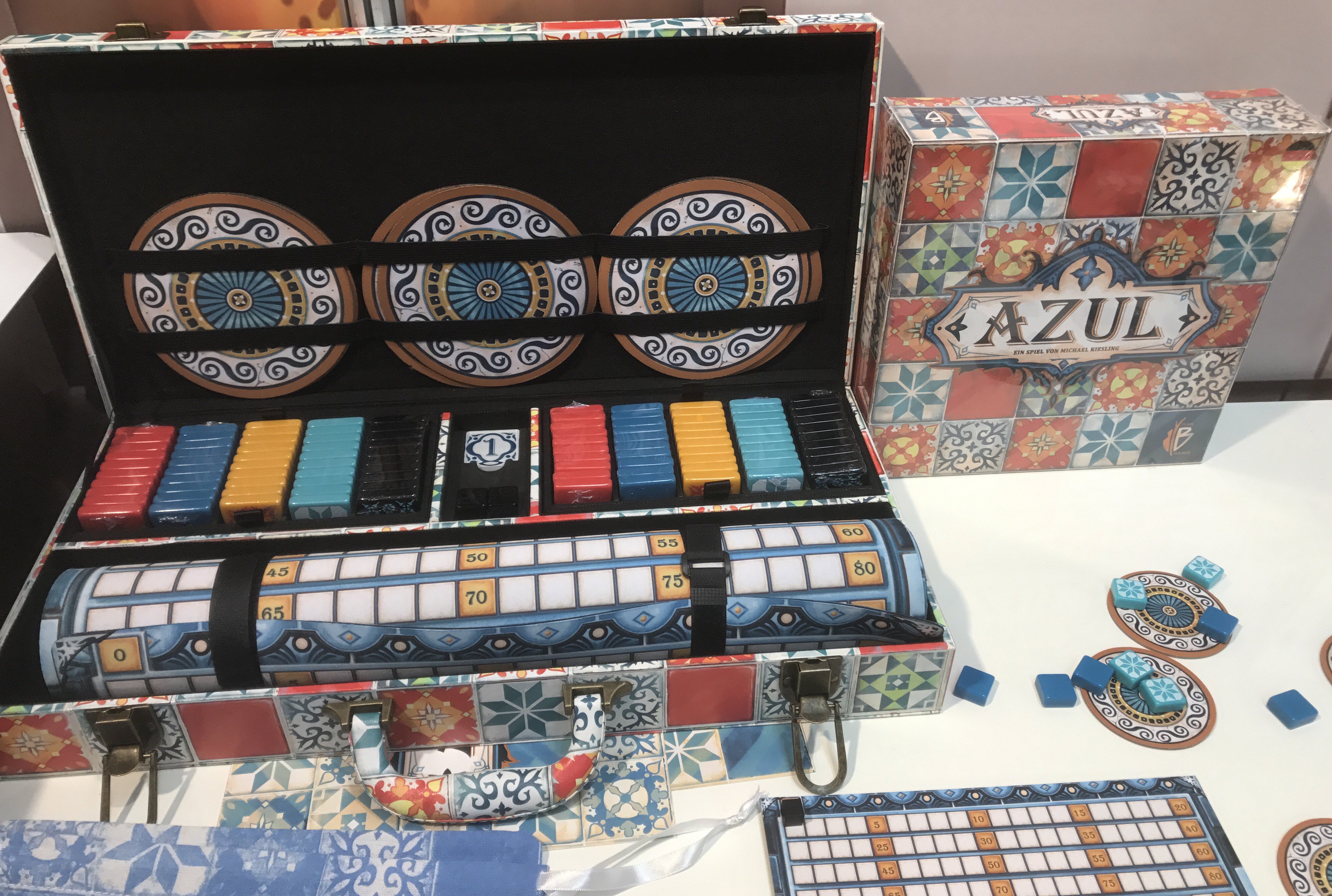 |
| Katherine also owns the special edition Azul Giant. |
What I remember most about these experiences is the conversation. Katherine and I would talk about the convention we'd just left in Florida, describing the games and the people we'd interacted with. We'd often have to pause mid-sentence because the turns would get so complex. Then, on my turn, I'd get to hear about so-and-so student that both Katherine and Denise had mentored, and I'd inevitably make a mistake that would cost me the game.
The boards would be set up on a circular crocheted piece by Denise. Unlike other games that use a rectangular board, Azul is played with a series of smaller circular boards that surround an empty space in the middle. This made it perfect for the crocheted cover on the table, and the game pieces beautifully adorned the space made by the various colors. At home, we have a rather large blanket crocheted by Denise, lovingly made in identical colors to a painting that Katherine made. It's a wonderful addition to our house, and it makes for something nice (& beautiful!) to cover up in on sadder days. The fact that the blanket matches the colors of Katherine's painting is an amazing bonus. Denise really took a lot of time to think about the things she crocheted for her friends, and it really shows.
 |
| The four of us playing Azul. |
I know that Denise did a lot in this world. She was very well known for her cancer activism in the educator community, standing up for her fellow teachers when they needed it most. Among students she was loved dearly for her dedication to teaching the dramatic arts. She was quite close to her family and undoubtedly has many stories there that should be told. But that small slice of her life that she shared with me was mostly just about board games. I wasn't Denise's closest friend. I certainly wasn't as close as Katherine is. But I really and truly appreciated Denise all the same. She was a tough opponent and won more than her share of the games I played with her.
I'll miss you.
My beloved friend Denise passed away a few weeks ago from her third battle with cancer. Today she would have turned 71,...
Posted by Katherine Hess on Thursday, March 9, 2023
13 January, 2023
A Ten Year Anniversary
I met Katherine ten years ago, on January 13, 2013.
We met online. Before she'd sent her first message to me, she'd already learned quite a bit about me. Back then, OKCupid was not as worthless as it is now. I'd first joined back when it was called TheSpark — it was common to go online there and take personality tests (I think I first found it when I searched for a way to take the Myers-Briggs Type Indicator test online (yes, I realize it's a junk test today, but remember this was the same year google was created and I was just a kid)) — and by this time I had answered thousands of questions on my OKC profile, allowing anyone looking me up there to get to know all kinds of things about me prior to ever having to talk to me. Honestly, I miss that kind of interaction today. All too often when I meet someone new I don't have nearly as much information about them as I did back in the early '10s.
 |
| From Randall Munroe's xkcd 2521. |
Within a few back and forth messages, we had already graduated to sharing made-up-on-the-spot fiction about toothpaste tube refilling and I was seriously impressed by her quick wit and creative mind. She made me laugh from the very start, and perhaps that is what made me fall for her so quickly. A few days later we had a very long phone conversation, and soon we were seeing each other regularly. It was perhaps the most important turning point in my life.
Personally, I prefer prime anniversaries to those considered significant merely because of base ten. But Katherine's preference is for increments of five, so this is the second such anniversary we'll have and I'm especially looking forward to it on that basis. Katherine means the world to me, and I'm so happy to be able to celebrate this anniversary with her. <3
15 December, 2022
Disability
I live with a disabled partner. Sometimes, it's just…hard. Things that other people take for granted don't always apply in our family. Simple tasks sometimes take extra time. Moderate tasks can be difficult to perform regularly. Hard tasks can be impossible.
Thankfully, I am an able-bodied person, and so I can pick up a lot of the slack when it comes to chores or dealing with heavy or far-away things. But this cuts to the core of my personal struggle: where exactly do I draw the line between offering my help and allowing my partner the opportunities to be self-reliant? It seems like the appropriate threshold is different from day to day, mostly based on how many spoons my partner has available. Yet knowing where this threshold lies on a given day is opaque to me unless my partner explicitly shares where the line is.
I am thankful that we are fortunate enough to have sufficient help beyond just us. Recently, we installed a stair lift to make it much more easy to travel between floors in our home, and this has greatly increased our quality of life. Almost as important are the emergency services officials in our community; twice this month they have been extremely helpful when we have needed it most. But at the same time, I find myself worrying; needing outside help two times in a month is two times too many. I feel as though I need to find additional solutions — like the amazingly helpful stairlift — that will help to ensure that we can get by even on bad days.
Currently, my partner uses canes to get around in the house. I think that will likely continue. But when it comes to being outside the home, I believe that we may need to switch to a wheelchair. I know this will only be positive for us. It will allow a level of mobility that has been lacking as of late. Yet at the same time I find that it brings somewhat unpleasant emotions. Without good reason, I sometimes emotionally feel as though I am somehow failing my partner, merely because we are needing to turn to additional expensive devices. I'm enormously grateful that we can afford these things, but it's not the price that is seemingly getting to me. It's more the unjustified feeling that, somehow, if I were a better partner, I'd have been able to make things better without resorting to these devices.
Things are just really hard in my personal life at the moment. I am doing my best, but it scares me that perhaps my best is not good enough.
05 December, 2022
Motivated Reasoning
I do not feel well at all.
I first encountered effective altruism in 2011. Since then, I've personally given nearly $100k (in both direct and in-kind donations) to what I've considered effective causes, and I've raised tens of millions of dollars via the orgs I've worked with. I did all of this because I strongly believe it to be the right thing to do. I've dedicated an entire decade of my life to EA organizations. I moderate the r/effectivealtruism subreddit; I organize the EA wikiproject on Wikipedia; I've served on two boards of EA orgs; I've worked at several EA orgs and volunteered at several more. Quite frankly, the field of Effective Altruism has been my life for as long as I've taken charity seriously. It is perhaps what has defined me the most for a very long time.
But the betrayal of SBF makes me feel sick to my stomach. The mere possibility that there may have been some in the movement who knew SBF was crossing a line haunts me. Before, I suppose I had an unreasonable blind trust that others in EA would cooperate in the prisoner's dilemma, that superrationality would hold sway, that I could trust my fellow EAs to be honest. And maybe I still can trust these things. As far as I know, the fraud stops at SBF and those running FTX. But even if I'm 95% sure of this, the 5% chance that others are like him makes me feel ill.
I wasn't friends with him. We merely served on the same board of directors. Maybe it is unreasonable to think this, but I cannot help but to feel like I should have known. With knowledge of how things eventually ended up, maybe the things I experienced should have clued me in, but they seemed reasonable at the time.
But today I caught myself practicing motivated reasoning. A person I think highly of mentioned that purchasing Wytham Abbey is not consistent with doing effective altruism. Usually I just ignore these comments and move on, but for some reason I decided to try to explain why it might have been thought to have positive expected value. Keep in mind that I do not even know for sure that it is _true_ that CEA bought the place. I just started generating possible reasons unnecessarily. It was only a few minutes later that I realized that this is motivated reasoning. Even if my arguments were true, I had not thought of them at all until this situation had come up, and I gave them as responses to defend something when I don't even know if it is a good thing or not. What am I even doing by tweeting in this way?
There is a difference between being clever and being wise. Maybe it is clever to be able to come up with reasons for things. But it is not wise, for if you can equally come up with reasons for two sides of a dilemma then you do not have reason to choose either side. If you can just explain things, regardless of how things end up, then you don't have true understanding. Instead, you must be able to register your own confusion in order to tell the difference between fiction and reality.
What should have happened today is that I should have registered confusion. I should not have rushed to come up with explanations for things that I do not even know. I should have been modest. I should have not have commented.
It's true that I am clever. But I am so very far away from being wise. I feel sick by what has happened; I feel hurt and deceived and taken advantage of. The org I founded has experienced a huge loss from this entire FTX debacle and I am seriously wondering how I can in good faith continue forward with raising money for causes where I am no longer quite as confident in all of the people running them.
I still believe in the arguments underlying EA. I have for years, and they still ring true. But I am much less confident that my fellow EAs would cooperate in the prisoner's dilemma. I find myself looking with just a smidge more suspicion that the posts written on the EA Forum may not be completely honest. Really, the truth is that each time I look at EA content on Twitter or anywhere else these days, I find myself feeling not entirely well.
Perhaps I just need to step back for a bit. (But how can I even do that when I need to continue raising money with the org I run?)
12 November, 2022
SBF
I feel dismayed. Shocked. I feel so stupid.
For reference, this is the awkward SBF I remember dealing with. He honestly did not strike me as the kind of person who would do what he apparently ended up doing, utilitarian or not.
I'm not sure why I trusted SBF. I guess you just naturally trust someone you've worked closely with. Someone who's donated significant funds that not only helped me directly, but several of my friends and fellow effective altruists.
Now, unless I'm severely mistaken, almost all the evidence I'm seeing points toward SBF having inappropriately used funds and then lying about it. He apparently stole not only the savings of thousands of innocent uninvolved people, but also tainted the very donations that I and several others have used over the years to do as much good as we possibly could. He's jeopardized the funding and lives of many effective altruists today, in many cases where people have already spent funds they were expecting but will now no longer get. He has destroyed the savings of anyone who foolishly held those savings in FTX or its related affiliates. Perhaps worst of all, he has tarnished the brand of effective altruism so incredibly badly that I honestly have to take stock and determine to what extent this reputational damage affects the fundraising work that I'm currently doing.
Sam had been a pillar in Effective Giving Quest's strategy. TSM FTX is a major esports team; FTX's purchase of Good Luck Games and subsequent holding of the Storybook Brawl world championships planned for this December had been planned to be a breakout position for EGQ. SBF's direct funding was going to allow EGQ to raise funds from game developers, streamers, and other gaming professionals without ever having to take a percentage to pay our own bills. Instead, we are now having to reevaluate our strategy and figure out how to move forward in a new environment where searching for "effective altruism" brings up fraud as the very first top story on Google and litters the first SERP from the fourth result onward.
I knew he spent his weirdness points in a weird way. I didn't think that mattered; I still don't. But other than that, I never caught on to him seriously being this dangerous. I didn't catch it for the years I worked at ACE, not even when we served on the board at the same time. I didn't catch it later when I looked into using FTX for my personal use. I didn't even catch it while I was prepping for calls with him about my new venture, Effective Giving Quest.
If it turns out that I'm wrong, that he's been unfairly characterized as doing fraud, then I'll later apologize for having said much of this. But the evidence I'm seeing now seems to indicate that fraud really did take place, and I just feel so monumentally tricked.
One of the only solaces I have comes from a short note from David Reinstein:
"…[T]he sad fall of FTX makes motivating effective giving, outreach, and engagement more important…. Previously, a pushback against ‘motivating effective giving’ and making mainstream giving more effective was ~‘we have so much money already, and the core EA billionaires are much better aligned than the general population will ever be’. If that argument is valid, I think ‘it should work in both directions’ … so the corollary is ‘if we have fewer billionaires/less funds, the above should be more relevant’."
While I continue to feel badly, some relevant comments from Eliezer Yudkowsky, Peter Wildeford, & Kevin Cornbob remind me that maybe I'm not so much to blame as I currently feel:
Good point - Sequoia and others invested hundreds of millions in FTX without uncovering the fraud or massive lapses in governance despite direct access to due diligence. Understandable that EA wasn't able to see this coming. https://t.co/JOBeXC7obq
— Peter Wildeford (@peterwildeford) November 12, 2022
 |
| Comment from Kevin_Cornbob on the EA Forum. |
@benthamite #crypto billionaire sbf ❤️s #effectivealtruism ♬ sonido original - Benthamite
EDIT ~12 hours later:
After thinking about it more, there were definitely more signs than I alluded to above. Nothing ever made me think: "this person will do something as serious as fraud", but there was at least one major instance where he took a serious action that felt rather wrong to me. I guess… I felt that it did not rise to the level of seriousness where this ever needed to be shared, or where I felt I should stop trusting him in other capacities. I suppose I felt that everyone makes mistakes, and just because this was what I might call a moral mistake, it maybe was made up for by his other actions and qualities. Maybe this kind of thing should have tipped me off. But it didn't. I still had moderate trust. Perhaps because I believe in assuming good faith, even in situations where it's difficult to see what that good faith might have been.
31 October, 2022
Halloween Anxiety
 |
| Eric as Steve (Minecraft). |
The lowest point of my life was in 1999. The previous year my then partner and I experienced a teen pregnancy. I mistakenly thought that the right thing to do would be to marry her and become a father. In my mind, once we decided to have the child, there was no other choice for me. But I was not then (and am not now) made for that kind of life. I experienced no parental attachment beyond feeling that I was responsible for my child's welfare. I experienced no joy in a marriage to the first longterm girlfriend I'd ever had. I could not handle college at a young age; I dropped out after only one semester. I could not handle working a steady job, either — even at my best, where I found success in what I did, I would leverage that success not into furthering my career, but in prioritizing my personal time. (At one call center, I was the best performing employee on Monday+Tuesday, where I would do as much in those days as the second best employee would do all week, but then I'd spend Wed–Fri completely slacking off, and letting the company know I had no intention of doing more.)
I was not smart enough at the time to take any action that would change things. I naively felt that the world must have intended for me to struggle as a young father, so I did. I felt like the world intended me to be married to this person whom I knew only by chance, so I did. I did nothing to improve our lot past the status quo. I languished. Depressed, but, at the same time, unemotional. I cried only when no one could see me looking.
My teenage partner was not really older than I. She had no more life experience. But, somehow, she was able to see through the situation and realize it to be something she had the power to change. It took a long time, but she eventually managed to gather up the courage to end our partnership. She left in late September 1999 without saying a word. She took what was then our child (afterward: her child) and started a new life without me.
She left a note, placing it in the one place that I suppose she felt I'd be sure to find it: on my gaming console, which I used often. But, lacking that note, and absent any verbal explanation from her, I naively did not understand where they had gone that first day. Nor the next. Nor the next. It wouldn't be until much later that I found the note. In the meantime, I only just slowly started suspecting what she had done.
Right in the middle of this time was Halloween 1999. At the time, I thought she might just have gotten angry and left for a few days to stay with family. I opted to leave the light on for her each evening, in case she were to come back late at night. I'm sure the reader knows where this is going, but I honestly didn't understand at the time.
People — children — kept knocking on my door. I didn't understand. Perhaps I was too fraught. It didn't occur to me that it was a holiday, though the costumes should have tipped me off. But I was too upset and scared to answer the door, so I just let them knock. Every time, they would eventually go away, but in the meantime I would cower in an inner room, too emotional to even look out the window. Minutes would pass, and another knock would startle me — it was a neverending hell of my own making. I was not thinking clearly back then.
What my then-partner did was the best thing for her; the best thing for our daughter; and the best thing for me. But I did not realize this until much later. Once I finally found the note, I switched from feeling scared and anxious to being sad and anxious. I stopped going out. I didn't go to the library, nor the school, nor my job, nor any grocery store. Slowly I ate the remainder of everything left in that house. Once all the food was gone, I went hungry for days before a friend went to the store on my behalf and purchased additional food with my money. By the time that food had run out, my family had been notified of what had happened, and they took over from there. I lived in a daze for months, not really understanding what I was to do with my life at that point. I felt lost, not just metaphorically, but even physically, in my own home. Like I was a stranger to it, even though it had served me as a dwelling for my first seven years before I'd ever moved there as a nupital home in my teenage years.
Ever since on each Halloween I'd mostly made a point to keep my lights off, my curtains drawn, and anything resembling decorations absent. For years afterward I made a point to be alone on Halloween, declining any and all invitations. Occasionally, this wouldn't work out, and I'd try to be cordial and celebrate with family when I was in town, and, later, I tried to be more normal when I moved into a home that was surrounded by lots of families trick-or-treating. But even during the times when I'd dress up, I never really got rid of that anxiousness surrounding the holiday.
Orange is my favorite color, but Halloween is perhaps my least favorite day of the year.
18 September, 2022
We Must Know
"Okay. I believe you. You clearly have access to far more advanced technology. Maybe you're not actually from the future, but you may as well have equivalent abilities from my perspective." They had passed the ad hoc informal test I'd quickly set up: finding the prime factors of a randomly generated very large composite — and then they followed it up by suggesting they predict the values of the next NIST Randomness Beacon pulse. It wasn't a good sign that they had chosen their own method, but it seemed reasonable as a quick proof of their capabilities. "You have my attention."
"Thank you. We were careful to pick you to reach out to, because we knew that you would take this seriously after we provided sufficient proof." Their appearance was normal, so much so that I almost thought it not worth thinking about. But that thought itself is worth recognizing. Whomever they are, they knew how to make themselves look unremarkable. "What you think you know about time travel is wrong. Neither the A- nor B- theory of time is correct. Other universes do exist, in a sense, but they do not have moral standing. P-zombies inhabit all other realities. This timeline is the only one with actual persons in it, and if we change this timeline then we affect what happens in the unique timeline that counts."
It's like they know exactly what kind of language to use to get across these ideas to me. A nagging feeling creeps up that they chose me more for their ability to convince me and get me up to speed quickly than for any other quality I might have. Here I am, the apparent chosen one, and it's only because I already know the shorthand for these philosophical ideas. Also: they'd better have damned good evidence for disqualifying so much of life from having moral standing.
"We know that you are skeptical of p-zombies. We do not have time to explain how we know what we know. Suffice it to say that you are best placed to affect this timeline anyway, so you may as well focus your efforts here." I wasn't sure that this made sense. Couldn't strong commitments affect…
"We have to be careful not to influence too much. It’s a precarious timeline we are on. Push too much in one direction or another, and it all comes tumbling down. Effective Altruism lies yet in its cradle; the key to figuring out AGI remains thankfully unthought of due to keeping a proportion of humanity in poverty; the dangers on every side of a multidimensional tightrope are balanced and must not be influenced. But, at the same time, we must know."
I don't know how to explain, but the look in their eyes as they said this had this feeling of steely determination. What once was unremarkable was now a clear drive: a purpose far beyond anything that I'd ever seen anyone have. I knew this even as I was trying to keep up with what was said. "You are trying to save the light of life? You're here to protect the timeline from some influence?"
"No. That part is done. We succeeded. The future is the Good Outcome. Better than you imagine. We passed all our trials, thanks in part most to luck, but also due to steady influence from what was once this timeline's future." We make it? They're saying we actually make it. I still don't have a lot of trust for what they say, but I can't help but feel my emotions surge as I catch up. "The timeline is stable, and we dare not touch it further. Such care has been taken to choose you, so that we do not ruin what has already been saved." Wait, what?
"Hold on. You're saying we're already on the good timeline, and that this timeline is special because only we have moral standing. And yet you're risking taking us off the path?"
"Yes. For your current values, this timeline already has all that we need; everything is the best that it can be, taking into account some sacrifices. But we must know." Again with the eyes. They're saying that our values do not align. I still don't trust them, but this is worse: I don't understand what they're saying to me. They're trying to say that they fixed the future, we all succeed, and yet they want something more?
"In our time, we are masters of our domain. We have the theoretical down pat, with our strongest thinkers in virtual space hard at work on the problem of entropy, which will affect our progeny eons in the future yet. There we expend most of our resources. Second is the hobby of many: exploring how we might save the Ancients by making small changes to the timeline — but this is never seriously done, because everything is so precarious. The Ancients must suffer small torments so that the future can be worthwhile." They pause, looking down. "I am of the third. We care about my contemporaries, those who are lost, never to be found. Those who left the cradle still count. We must know."
Slowly, they open a backpack that I don't remember being there only a moment ago. "You, in this time, are lost, too. So many persons, cruelly tortured, living lives of misery so the rich can eat their flesh. If we could, we would help — but we can't. It is too precarious." They retrieve what looks like a small ball from the backpack. "I regret to say that I am not here for you. I am here for those in my time who exist beyond my light cone. We want to know where they have gone. We want to know what chances they have. We want to know what it is like, there, in the great beyond. I am here to get what knowledge I can without influencing x-risks." Another pause as they seem to absentmindedly turn over the ball in their hand. "…without influencing s-risks."
This is why I am chosen: because I am unimportant. I will make no waves. They chose me because I might understand, but also because I do not matter. Risking the future is not worth choosing someone more capable.
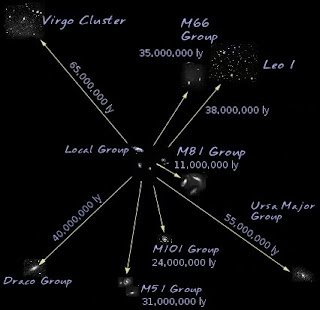 "When I come from, the local supercluster is all that we have. The expansion of the universe has pushed away everyone else. Our siblings who have left the cradle are no longer reachable, and time travel does not work in the way you expect. We do not have access to them. Our knowledge of other superclusters is taken from us, blanked from our records. We don't know what we don't know. But we must know. Are they okay? What mysteries do they experience? How different is their universe from ours? They have moral standing. They count. We must know."
"You're here for… the James Webb Space Telescope?" That doesn't make any sense. Is time travel only able to come here?
"We want to influence where Webb is aimed. We want to influence how future projects prioritize where they look. Too much time is spent on the Virgo Supercluster. We need information from elsewhere."
Why would this time be special? They are speaking as though… It must be trillions of years in the future. Yet they go back to when we are on just one planet? To look at distant objects? And isn't James Webb already aimed at distant objects? If they chose me because I'd understand, then they may have made a mistake. This doesn't make sense. "Why now? Why not look in a different era when they have more sophisticated technology?"
"You'd call it a singularity, though from our perspective it was just another revolution. What matters is that we are not allowed to be then. We can only reach out to now, in the decades prior. Here is where we can have influence without being countered."
This is too many impossible things before breakfast. It's too dissimilar. I… I just assumed that if this was the good timeline, then there would be no singularity soon. It's starting to seem like this being just doesn't share my values. Maybe they underwent some near-paradise hell, Friendship is Optimal style. Otherwise, why would…
"In my time, we are stranded on an island of influence, unable to know what our siblings accomplished in neighboring superclusters. We know nothing of what they found in these far off places. We know nothing of their trials. Of their successes. Of their failures. We have no access to any of what we need to know. The best we can do is this: coming now, to here, with you. The best we can do is to influence the direction of space exploration in the near term, without disturbing the precarious balance that leads to the Good Outcome." The ball seems to roll in their hand, without them maneuvering it. I suddenly realize that I don't know what color it is. I hadn't noticed its color this entire time. It… doesn't have a color.
"There you stand, Ancients of old, with full access to the universe writ large, and you squander every moment without looking to the deep space that only you have access to. We must know."
I can't take my eyes off the ball. It doesn't seem to be a sphere. Why did I call it a ball? Am I even thinking clearly about any of this?
"It is a calculated risk, talking with you now. We must not disturb the balance. But even though life is already saved, it also important to see what can only be seen in this era. We must influence where Webb is pointed. And I need your help to do it."
"Thank you. We were careful to pick you to reach out to, because we knew that you would take this seriously after we provided sufficient proof." Their appearance was normal, so much so that I almost thought it not worth thinking about. But that thought itself is worth recognizing. Whomever they are, they knew how to make themselves look unremarkable. "What you think you know about time travel is wrong. Neither the A- nor B- theory of time is correct. Other universes do exist, in a sense, but they do not have moral standing. P-zombies inhabit all other realities. This timeline is the only one with actual persons in it, and if we change this timeline then we affect what happens in the unique timeline that counts."
It's like they know exactly what kind of language to use to get across these ideas to me. A nagging feeling creeps up that they chose me more for their ability to convince me and get me up to speed quickly than for any other quality I might have. Here I am, the apparent chosen one, and it's only because I already know the shorthand for these philosophical ideas. Also: they'd better have damned good evidence for disqualifying so much of life from having moral standing.
"We know that you are skeptical of p-zombies. We do not have time to explain how we know what we know. Suffice it to say that you are best placed to affect this timeline anyway, so you may as well focus your efforts here." I wasn't sure that this made sense. Couldn't strong commitments affect…
"We have to be careful not to influence too much. It’s a precarious timeline we are on. Push too much in one direction or another, and it all comes tumbling down. Effective Altruism lies yet in its cradle; the key to figuring out AGI remains thankfully unthought of due to keeping a proportion of humanity in poverty; the dangers on every side of a multidimensional tightrope are balanced and must not be influenced. But, at the same time, we must know."
I don't know how to explain, but the look in their eyes as they said this had this feeling of steely determination. What once was unremarkable was now a clear drive: a purpose far beyond anything that I'd ever seen anyone have. I knew this even as I was trying to keep up with what was said. "You are trying to save the light of life? You're here to protect the timeline from some influence?"
"No. That part is done. We succeeded. The future is the Good Outcome. Better than you imagine. We passed all our trials, thanks in part most to luck, but also due to steady influence from what was once this timeline's future." We make it? They're saying we actually make it. I still don't have a lot of trust for what they say, but I can't help but feel my emotions surge as I catch up. "The timeline is stable, and we dare not touch it further. Such care has been taken to choose you, so that we do not ruin what has already been saved." Wait, what?
"Hold on. You're saying we're already on the good timeline, and that this timeline is special because only we have moral standing. And yet you're risking taking us off the path?"
"Yes. For your current values, this timeline already has all that we need; everything is the best that it can be, taking into account some sacrifices. But we must know." Again with the eyes. They're saying that our values do not align. I still don't trust them, but this is worse: I don't understand what they're saying to me. They're trying to say that they fixed the future, we all succeed, and yet they want something more?
"In our time, we are masters of our domain. We have the theoretical down pat, with our strongest thinkers in virtual space hard at work on the problem of entropy, which will affect our progeny eons in the future yet. There we expend most of our resources. Second is the hobby of many: exploring how we might save the Ancients by making small changes to the timeline — but this is never seriously done, because everything is so precarious. The Ancients must suffer small torments so that the future can be worthwhile." They pause, looking down. "I am of the third. We care about my contemporaries, those who are lost, never to be found. Those who left the cradle still count. We must know."
Slowly, they open a backpack that I don't remember being there only a moment ago. "You, in this time, are lost, too. So many persons, cruelly tortured, living lives of misery so the rich can eat their flesh. If we could, we would help — but we can't. It is too precarious." They retrieve what looks like a small ball from the backpack. "I regret to say that I am not here for you. I am here for those in my time who exist beyond my light cone. We want to know where they have gone. We want to know what chances they have. We want to know what it is like, there, in the great beyond. I am here to get what knowledge I can without influencing x-risks." Another pause as they seem to absentmindedly turn over the ball in their hand. "…without influencing s-risks."
This is why I am chosen: because I am unimportant. I will make no waves. They chose me because I might understand, but also because I do not matter. Risking the future is not worth choosing someone more capable.

"You're here for… the James Webb Space Telescope?" That doesn't make any sense. Is time travel only able to come here?
"We want to influence where Webb is aimed. We want to influence how future projects prioritize where they look. Too much time is spent on the Virgo Supercluster. We need information from elsewhere."
Why would this time be special? They are speaking as though… It must be trillions of years in the future. Yet they go back to when we are on just one planet? To look at distant objects? And isn't James Webb already aimed at distant objects? If they chose me because I'd understand, then they may have made a mistake. This doesn't make sense. "Why now? Why not look in a different era when they have more sophisticated technology?"
"You'd call it a singularity, though from our perspective it was just another revolution. What matters is that we are not allowed to be then. We can only reach out to now, in the decades prior. Here is where we can have influence without being countered."
This is too many impossible things before breakfast. It's too dissimilar. I… I just assumed that if this was the good timeline, then there would be no singularity soon. It's starting to seem like this being just doesn't share my values. Maybe they underwent some near-paradise hell, Friendship is Optimal style. Otherwise, why would…
"In my time, we are stranded on an island of influence, unable to know what our siblings accomplished in neighboring superclusters. We know nothing of what they found in these far off places. We know nothing of their trials. Of their successes. Of their failures. We have no access to any of what we need to know. The best we can do is this: coming now, to here, with you. The best we can do is to influence the direction of space exploration in the near term, without disturbing the precarious balance that leads to the Good Outcome." The ball seems to roll in their hand, without them maneuvering it. I suddenly realize that I don't know what color it is. I hadn't noticed its color this entire time. It… doesn't have a color.
"There you stand, Ancients of old, with full access to the universe writ large, and you squander every moment without looking to the deep space that only you have access to. We must know."
I can't take my eyes off the ball. It doesn't seem to be a sphere. Why did I call it a ball? Am I even thinking clearly about any of this?
"It is a calculated risk, talking with you now. We must not disturb the balance. But even though life is already saved, it also important to see what can only be seen in this era. We must influence where Webb is pointed. And I need your help to do it."
20 August, 2022
Personal Value Origination

"I was raised by TV. I always knew this, but I didn't realize how pernicious it truly was until I went back to watch these old television shows. I see my values in them. This is who I am. These are the values that most make up who I am as a person. Am I just…the product of '90s sitcoms? What does this mean about me?"
It's true that, in isolation, we would grow up effectively deaf and dumb. With no instruction, we would not be able to take advantage of a shared language, a shared culture, or even shared values. The idea that our values come from our upbringing means that many of the values behind who we are today may indeed come from arbitrary sources like television shows. Should we be concerned about this? If the TV shows behind our actual values today were made without regard to how they might influence various children’s values back then, does that somehow make who we are lesser?
If your conception of a proper human being includes gaining instruction from proper sources, then it makes sense to feel this way. But I don’t think it is appropriate to judge the value of a human being based on the types of instructional learning media they were exposed to as children, even if it means that much of who they are today can be attributed directly to those sources.
I believe in charity. If that belief started because of a tv show I watched when I was young, rather than because my parents taught me, does that warrant scorn? I don’t think that it does. The source does not matter, so long as the content is good. Even if the source is not trying to teach good moral lessons, good fiction writing has to include a satisfying narrative, which almost always includes what most of humanity would consider either a good moral character or an explicitly not good moral character which we are clearly intended to not root for. If something has good writing (and this is worth watching), it almost always has as part of it some level of moral instruction suitable for learning appropriate lessons. (Good stories don’t have to include this, just as art doesn’t have to be beautiful. But it takes an already taught mind to appreciate art or stories that don’t have this common hook.)
If you learned how to be how you are from TV shows way back when, so what? Would it have been better somehow if your parents taught you? Or if you learned from books or tutors instead? I’m not sure it matters that much, in the end. Maybe parents would be better suited at tailoring lessons directly for you, optimizing how quickly you learned the lessons you needed to learn. But I’m not sure that, several years on, it make all that much of a difference in terms of quality.

Where we learn how to be who we are does matter. But I don't think that we should be ashamed of these sources when they come in the form of media like television. So long as we can be proud of who we are, we too should be comfortable with where those lessons came from.
06 August, 2022
Salvatore Louis "Ralph" Tomaso

I say it was a warped view because I grew up with this arrangement as normal. Had you asked me back then, I would have claimed that it is normal to only have one grandfather and for grandfathers to spend all day in bed. (I also had a grandfather on my dad's side, but he was called "Abuelo" — I did not realize this was my other grandfather until I was much older.)
Papa had huge numbers of pillows on his bed. We would make forts there, draping the sheets to create secure rooms. We'd make ramps out of the pillow tops and run my cars across them. He'd teach me chess on that bed. We watched so many videos about military campaigns in World War II.
Occasionally, I'd be playing in the living room, perhaps a game of The Price is Right, and I'd see him come walking to the kitchen. He would get himself a snack of sardines and mini hot dogs in a can, then head back to his bedroom. I don't remember ever actually eating with him. He took his meals in that bedroom. I'm sure this isn't completely true — surely he came out occasionally to eat at the table, maybe on days when several family members were over for christmas or whatever. But my memory is hazy. I only ever remember him eating in his bedroom.
Every once in a while, we would go on an outing and he would sit in the passenger side seat. Often he would nap there during the ride, but if he stayed awake, he would make a very distinctive sound with his throat every once in a while. Years after he died, I one day in my thirties heard myself make the same sound involuntarily. It doesn't happen often, maybe every few months or so, but it is a distinctive clearing of the throat that reminds me of my grandfather every time I do it without thinking.
 |
| C-130 in Kham Duc in 1968. |
His mother, my great grandmother, insisted that his then-to-be-wife, my grandmother, learn how to make authentic Italian meals s that he would never starve on his travels. I remember eating so many Italian style meals at my grandparent's house, even though my grandmother (the cook) wasn't at all Italian.
He also had a pet parakeet, named Pretty Boy. Pretty Boy would repeat all kinds of tunes, so you could always tell what kinds of show my grandmother would watch in the living room based on what melodies Pretty Boy would play. He also spoke quite a few english phrases, though to him they were just more tunes. Pretty Boy lived in the porch, a covered, enclosed, and air conditioned area that apparently was a porch before it was turned into a new room. The actual porch opened up beyond even that, onto a large fenced backyard, filled with trees and lawn, a toolshed wired for electricity and filled with wood and tools and all kinds of knickknacks, and what used to be a pool — though I only ever remember it as a wooden deck in the shape of a pool, complete with place settings to eat outside among the many, many birdhouses that my grandfather would make and set up in the area. I can recall spending hours watching birds with my grandmother on that porch, looking through the Audubon's almanac to see what kinds of birds lived in the many birdhouses in that back lawn. And, beyond the fence, a row of fruit of trees, thoughtfully planted. I'm not sure that they were a part of my grandparent's property, being behind the fence line, but there was not other house nearby. Perhaps it was city land that was never parceled out. Regardless, apple and fruit trees lie in a line there, and I would climb them often. To the side a bit were huge patches of blackberries — I remember collecting all kinds of fruits and berries and bringing them back to my grandmother at certain times of year.
I see in myself qualities of my grandfather. I don't just mean my propensity to sleep — his mannerisms, his fascination with games, his drive to learn more via television — these are all things that I see in myself. Yet there is so much about him that I never learned because of my warped childhood view. There're so many periods of his life that I just never knew anything about. How did he react when he learned that his 23 year old son, Billy, died of illness, only a few months after his mother died of old age? My grandfather was only 34 years old then. Where was he? Did he take a leave from the military?
 |
| Empire State Building on fire in 1945. |
In 1945, did my grandfather have something to do with the B-25 that hit the Empire State Building? I can't tell if his friends were involved in the accident, or if his family were affected, or what. But apparently some kind of connection exists, according to family records that I no longer have access to.
When my grandfather died, I attended his funeral. They asked if anyone wanted to come up to speak, so I did. I talked about the side of him that I knew. The person I'd spent so many hours with, mostly because he lived only a few houses down the street from me. I talked about pillow forts and racing small cars on his bed. After I sat down, no one else spoke about him. I remember thinking that what I had said seemed so very small — that so much more happened in his life and it wasn't fair that only I spoke about such a small part of his. I realize now that others didn't speak because they were grieving and felt unable to. But it still felt weird to me at the time. I was eighteen years old.
Subscribe to:
Posts (Atom)